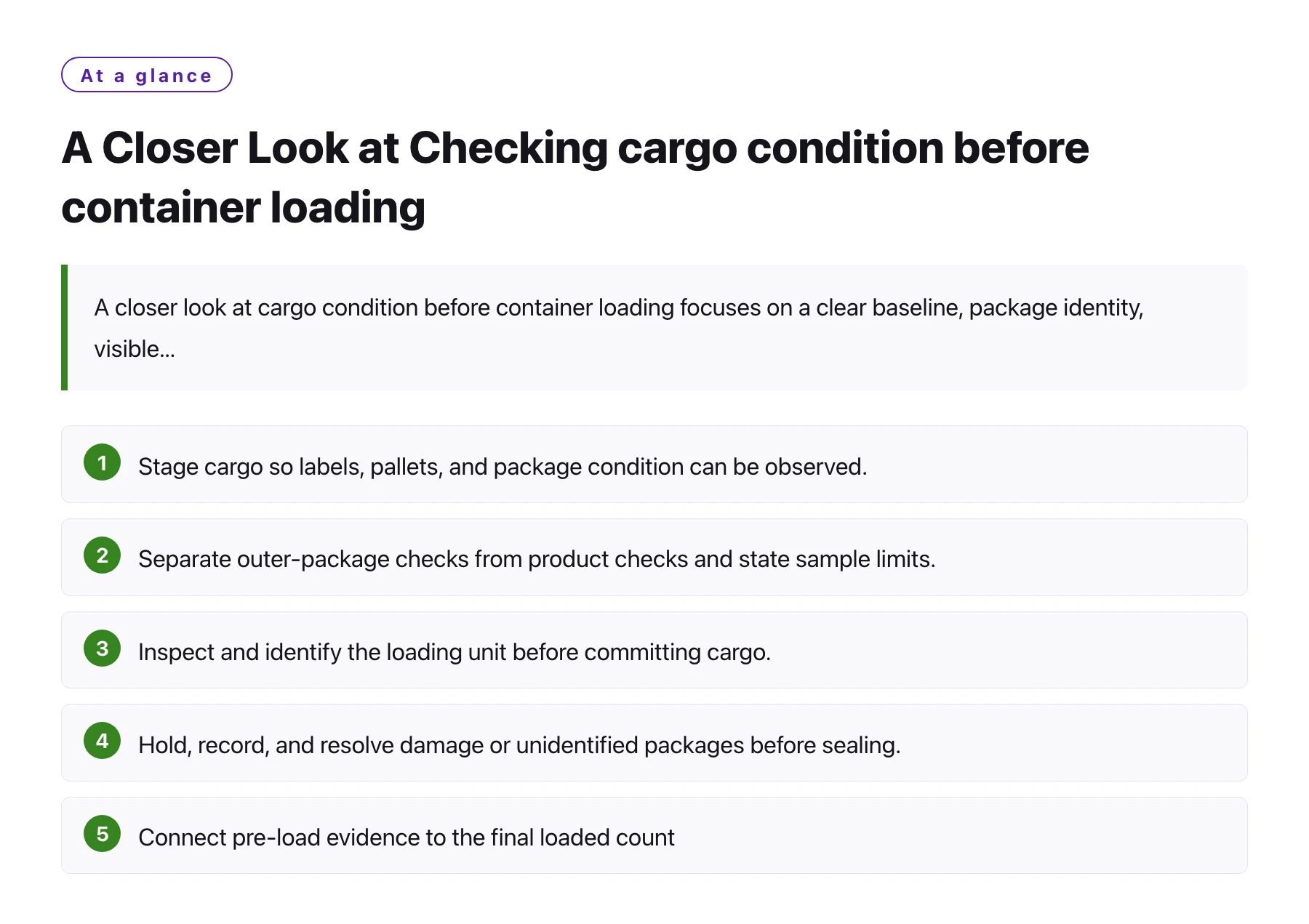
A closer look at cargo condition before container loading focuses on a clear baseline, package identity, visible damage, the loading unit, and the decision process for exceptions. Buyers should state whether checks cover the exterior, selected packages, or product contents, then link staged cargo, loaded packages, photographs, and final documents to the same order and container.
Key takeaways
- Stage cargo so labels, pallets, and package condition can be observed.
- Separate outer-package checks from product checks and state sample limits.
- Inspect and identify the loading unit before committing cargo.
- Hold, record, and resolve damage or unidentified packages before sealing.
- Connect pre-load evidence to the final loaded count, container, and release owner.
Pre-load condition evidence is most useful when it is collected before products are blocked by other cargo. The report should show what was observed and where access or scope limited the conclusion.
Set a condition baseline while the cargo is staged
Cargo condition is easier to assess before packages enter a container. Arrange products in a clean, well-lit staging area with enough access to see carton faces, pallet bases, labels, and protective materials. Record the order, item, lot, and package identifiers represented. If goods are mixed or blocked by other pallets, note that access limits the check.
Compare staged quantities and visible identities with the approved order and current packing list. Identify whether the review checks every package, selected packages, or only the exterior condition. Mark the count method in the assignment and report. Do not allow a general phrase such as cargo inspected to imply checks that were not performed.
Photograph a wide view of each staging group and close views of package labels or visible damage. Use identifiers or a count sheet to connect the photographs to the list. Keep the image sequence consistent and dated so a receiving team can tell which goods were checked before loading.
Separate product condition from packaging condition
An intact outer carton can conceal an internal defect, while a scuffed carton may still protect the product. State which layer is being assessed: outer carton, pallet, protective packaging, or product itself. Opening a carton can affect seals, cleanliness, or packing integrity, so agree when sampling and resealing are allowed.
Use product-specific acceptance criteria for visible condition. For example, identify what the inspector should record about moisture, corrosion, cracks, deformation, finish, seals, or contamination where relevant. Avoid using one generic checklist to judge unrelated products. If a characteristic requires measurement or testing, specify the method and responsible reviewer.
Keep inspection findings factual: package number, observed condition, location, quantity affected, and evidence. Separate the observation from a suspected cause. A damaged carton might have been affected during factory handling, staging, or transport to the loading area; investigation should establish responsibility.
Inspect the loading unit before cargo is committed
Before loading, record the container or vehicle identifier and inspect visible interior surfaces, floor, doors, seals, odor, moisture, holes, protrusions, and residue. Confirm that the unit is appropriate for the cargo and the planned handling method. If a concern can expose goods to water, contamination, crushing, or access problems, pause and notify the authorized contact.
Check the loading location, equipment, and access. Ensure there is space to maneuver pallets without striking walls or dropping cartons. Confirm lifting and stacking instructions are visible to the team. Record weather exposure or staging conditions that could affect moisture-sensitive packaging.
The IMO/ILO/UNECE CTU Code gives guidance on packing and securing cargo transport units for sea and land transport.[1] Apply cargo-specific instructions alongside that guidance. A condition check is not a substitute for safe loading, weight control, or cargo-securing requirements.
Decide how defects change the load plan
Before the first pallet moves, define a hold area and contact for damaged or unidentified packages. Decide who may replace, re-pack, clean, re-label, inspect, or accept a deviation. Do not mix an affected item back into the load until the buyer or delegated owner records a decision.
For a defect, identify the package, lot, quantity, condition, photographs, and any immediate protection. Check adjacent packages or the same production lot if the issue may be systematic. Record whether the cargo remains staged, is reworked, or is excluded from the shipment.
If a nonconforming package is removed, reconcile the revised count and documents before sealing. If replacement goods are added, verify that they match the order and are represented in the final packing list. Avoid changing commercial or customs records without the responsible issuer’s approval.
Keep the inspection scope and limitations visible
A pre-load visit may not verify hidden product characteristics, the entire order, regulatory status, or cargo performance in transit. List what was checked and what was not. If some pallets were inaccessible or production was incomplete, identify them so the buyer can decide whether additional review is needed.
Use a consistent report with order reference, date, site, inspector, package IDs, sample basis, observed condition, photographs, exceptions, and decision owner. Record the container number and loading status if the assignment includes observing loading. Keep inspection records distinct from supplier explanations and buyer concessions.
If the load is split across several containers, report the condition and package list separately for each unit. Link the final seal and count to the correct documents. This keeps evidence useful if damage or shortage appears at destination.
Coordinate condition checks with shipment release
At completion, compare the checked packages with those actually loaded. Record additions, removals, repacking, final quantity, and seal details. If the loading team changes the arrangement after inspection, determine whether the condition check remains valid or needs a repeat observation.
Route the report to quality, procurement, and logistics contacts before the cutoff for dispatch. Keep pending actions visible. The buyer’s named release owner should review critical exceptions rather than assuming that a signed inspection report automatically releases goods.
For cargo loading supervision in China, buyers may assess cargo loading supervision as one coordination resource. Define whether the task covers staged cargo condition, package identity, unit inspection, loading observation, and discrepancy escalation. Set release authority and reporting deadlines in advance.
Sources
Frequently asked questions
Should all cartons be opened during a cargo condition check?
Only if the assignment requires it and the buyer has approved opening and resealing. State whether the check covered exterior packaging, sampled contents, or every product.
What should happen when damaged packages are found?
Identify and isolate the affected packages, record condition and evidence, notify the authorized contact, and document whether they are reworked, replaced, excluded, or accepted.
Does a passing pre-load check guarantee cargo arrives undamaged?
No. It documents condition at a point in time. Loading, handling, and transit can create later damage, so retain route and receiving evidence as well.
What should link the inspection report to the shipment?
Use purchase-order and packing-list revisions, package and lot identifiers, container number, inspection date, final loaded count, and seal details where applicable.